
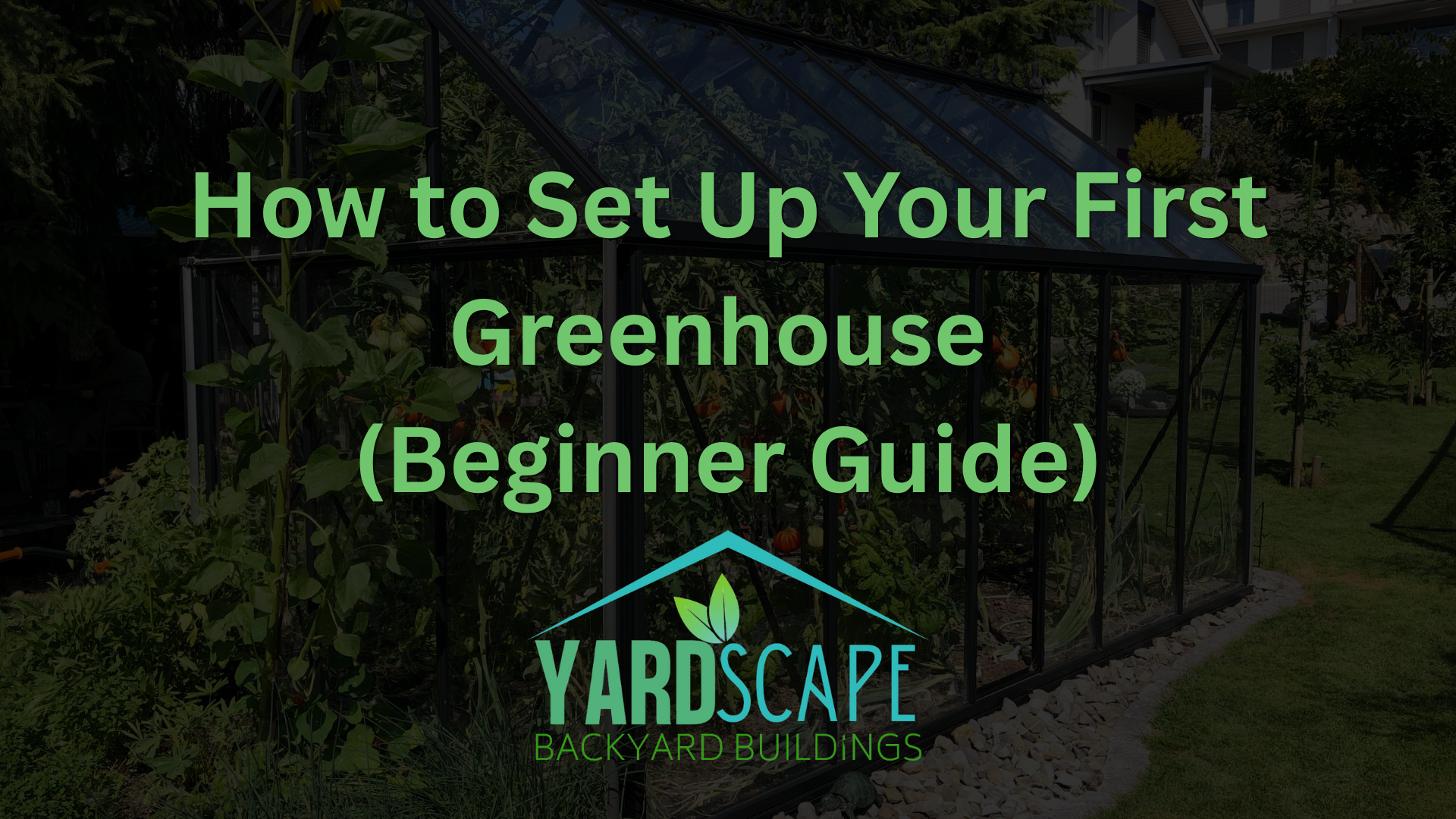
How to Set Up Your First Greenhouse (Beginner Guide)
Starting your first greenhouse is exciting.
Whether you’re looking to grow your own food, extend your gardening season, or create a dedicated space for plants, a greenhouse opens up a whole new level of control and opportunity.
But if you’re new to it, it’s easy to feel overwhelmed. What size do you need? Where should it go? What type of structure makes the most sense?
This guide will walk you through the essentials so you can set up your first greenhouse the right way — and avoid common beginner mistakes.
Why a Greenhouse Makes a Difference
A greenhouse gives you something traditional gardening can’t: control.
You can:
Extend your growing season
Protect plants from extreme weather
Manage temperature and humidity
Start plants earlier in the year
Grow a wider variety of crops
For many first-time buyers, the biggest benefit is consistency. You’re no longer relying entirely on outdoor conditions.
Step 1: Choose the Right Location
Location is one of the most important decisions you’ll make.
Look for a spot that:
Gets plenty of sunlight (ideally 6+ hours per day)
Has good drainage
Is easily accessible from your home
Has enough space for airflow around the structure
Avoid placing your greenhouse:
Too close to large trees (shade + falling debris)
In low areas where water collects
In spots that are difficult to reach regularly
A well-placed greenhouse will be easier to use — and more productive.
Step 2: Decide on Size (Think Bigger Than You Expect)
This is where many first-time buyers make a mistake.
Most people underestimate how much space they’ll need.
As you plan, think about:
Walking space inside
Shelving or work areas
Future plant expansion
Storage for tools and supplies
If you’re debating between sizes, going slightly larger often makes sense. A greenhouse tends to fill up quickly once you start using it.
Step 3: Understand Your Structure Options
Greenhouses come in a variety of materials and styles, but one of the most important decisions is the frame structure.
Common Options Include:
Wood frames
PVC or lightweight kits
Metal-framed greenhouses
Why Many Buyers Choose Metal Greenhouses
For long-term use, metal structures offer several advantages:
Durability: Holds up well against weather and humidity
Low maintenance: No rot, warping, or pest concerns
Stronger structure: Better suited for year-round use
Scalability: Easier to build larger, more functional spaces
Metal greenhouses are especially popular for buyers who want something that will last and grow with their needs.
Step 4: Plan for Ventilation and Airflow
A greenhouse without proper airflow can quickly become too hot or too humid.
Good ventilation helps:
Prevent mold and mildew
Regulate temperature
Improve plant health
Consider including:
Roof vents or ridge vents
Side vents or windows
Fans if needed for larger structures
Airflow isn’t just a “nice to have” — it’s essential for success.
Step 5: Think About Your Foundation
Your greenhouse needs a stable, level base.
Common options include:
Gravel pads
Concrete slabs
Treated wood bases
The right foundation depends on:
Your location
The size of the structure
Drainage conditions
A solid foundation improves durability and makes installation smoother.
Step 6: Start Simple Inside
You don’t need to fully outfit your greenhouse on day one.
Start with:
Basic shelving or tables
A simple watering setup
Room to move and work
As you gain experience, you can add:
Irrigation systems
Heating or cooling
Additional storage
Starting simple helps you learn what you actually need.
Step 7: Choose Plants That Match Your Experience Level
If you’re new to greenhouse growing, start with plants that are easier to manage.
Good beginner options include:
Herbs (basil, mint, parsley)
Leafy greens (lettuce, spinach)
Tomatoes
Peppers
These plants respond well to greenhouse environments and help you build confidence quickly.
Common Mistakes First-Time Greenhouse Buyers Make
Avoid these common issues:
Choosing too small of a structure
You’ll likely outgrow it faster than expected.
Ignoring ventilation
Temperature control is critical.
Overcomplicating the setup
Start simple and build over time.
Poor placement
Sunlight and drainage matter more than convenience alone.
A Better Way to Approach Your First Greenhouse
Instead of trying to get everything perfect upfront, focus on:
Getting the right structure
Choosing a good location
Keeping your setup simple
Learning as you go
A greenhouse is something you grow into — not something you have to master on day one.
Setting up your first greenhouse doesn’t have to be complicated.
With the right location, a well-chosen structure, and a simple starting plan, you can create a space that supports your goals for years to come.
Many first-time buyers find that investing in a durable structure — like a metal greenhouse — gives them the flexibility and reliability they need as their experience grows.
The key is to start with a solid foundation, stay consistent, and enjoy the process.
Written by: The Yardscape Buildings Team
Shop Greenhouses!
Follow Us on Social
Discover more from Yardscape Backyard Buildings
Thinking about buying a shed? Learn what makes PineView Sheds stand out, from construction quality and warranties to electrical packages and rent-to-own options.